
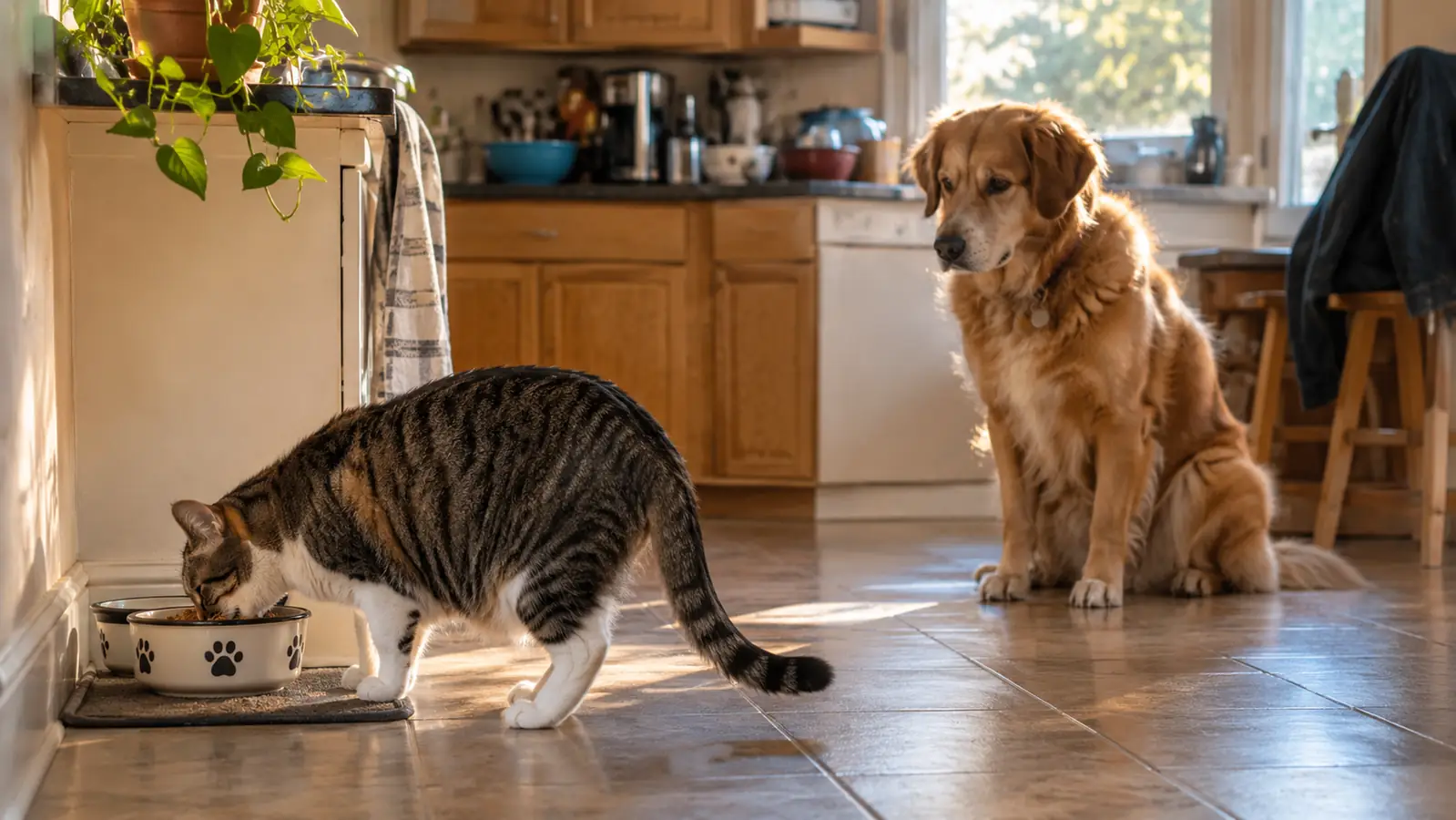
The cat's dinner used to last about ninety seconds in my house. I would set Pepper's bowl down, turn to rinse the kettle, and hear beagle nails on tile. By the time I turned back, Biscuit had her muzzle in the bowl and Pepper was sitting a few feet away, staring at me as though I had arranged the whole thing on purpose. It took a SureFlap SureFeed to end that, and it took longer than I expected for either animal to admit it.
Pepper is nine, a gray domestic shorthair, indoor only, and a grazer. He wants small meals several times a day, and he wants to eat them alone. Biscuit is seven, a beagle mix, twenty-eight pounds of food motivation, and she has never met a bowl she did not consider hers. I spent twenty-two years at the front desk of a veterinary practice here in Fresno, and I heard "he just won't eat" from plenty of owners whose cat was really being pushed off its own dinner. Then I became one of them.
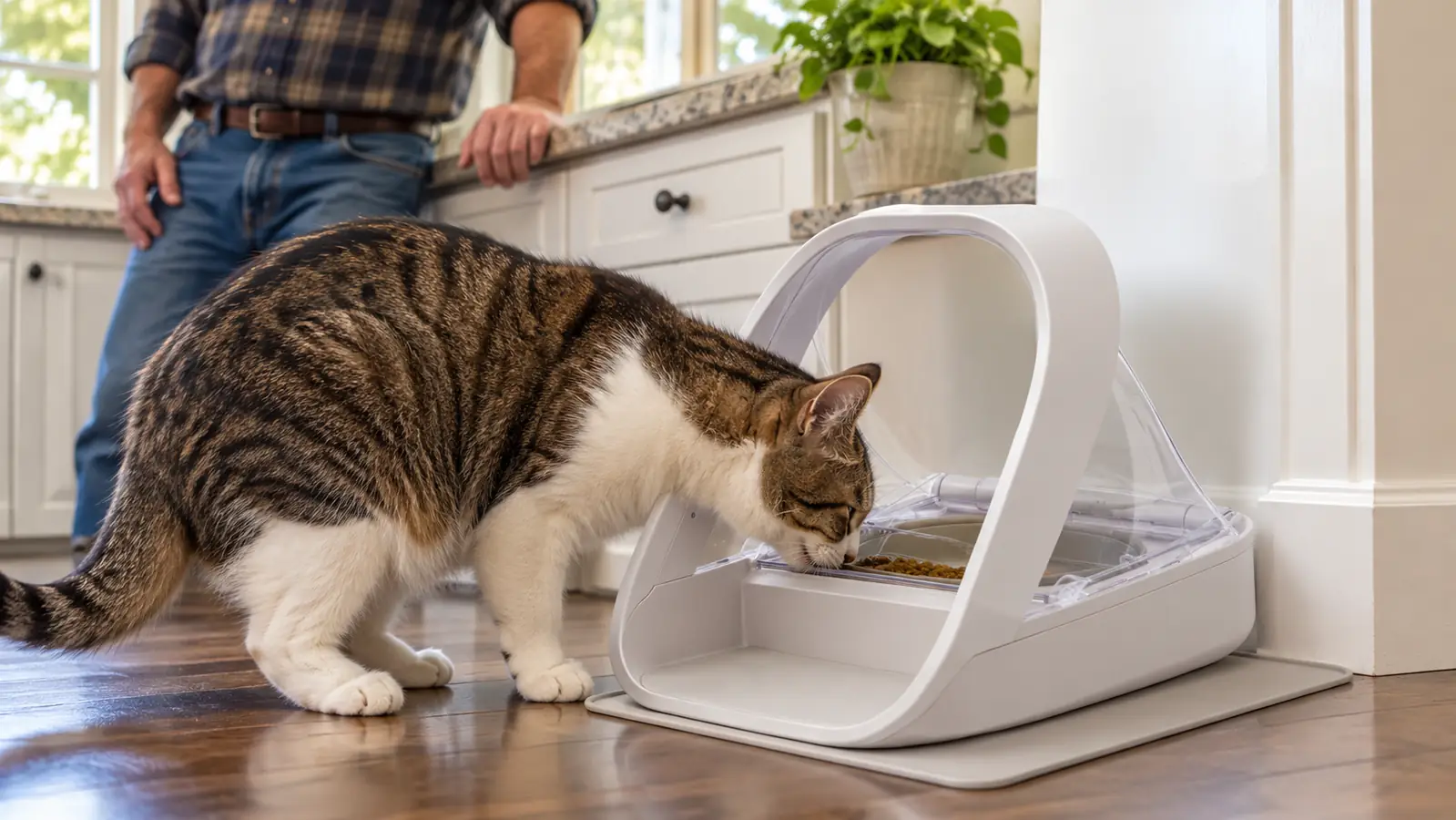
We tried the obvious fixes. I fed them in separate rooms and Biscuit scratched the paint off the door. I put Pepper's bowl up on a counter and he quit eating for two days. Ray bought a baby gate and tripped over it twice in one week. What finally worked, and what has sat on my kitchen floor ever since, is the SureFlap SureFeed microchip feeder.
The idea is simple, which is not the same as easy. A reader on the feeder picks up the microchip your cat already has, or the collar tag that comes in the box, and the lid in front of the bowl lifts. When the cat backs away, the lid comes down. Biscuit can stand over that feeder with her nose mashed against the seam and it will not open for her. The SureFlap unit is battery powered, holds about thirteen and a half fluid ounces, and takes wet food or dry. One tag is included, and it will remember up to thirty-two IDs, which is a good deal more than I will ever need.
The first four days were a negotiation. Pepper circled the feeder, waited for the lid to move, and walked off without eating. I sat on the floor next to it twice a night with a little wet food smeared on the edge of the bowl, which is not dignified for either of us. By the fifth day he had it figured out. Then came the night the arguing stopped.
Biscuit stood over that closed lid for close to four minutes, nose to the seam, and then she turned around and ate her own dinner. That was the end of it.
Pepper Eats Alone Now. Biscuit Has Her Own Bowl.
A reader that opens for one microchip and stays shut for everyone else. Battery powered, holds 13.5 fl oz, works with wet or dry food, and comes with one collar tag.
Amazon Check Today's Price on Amazon →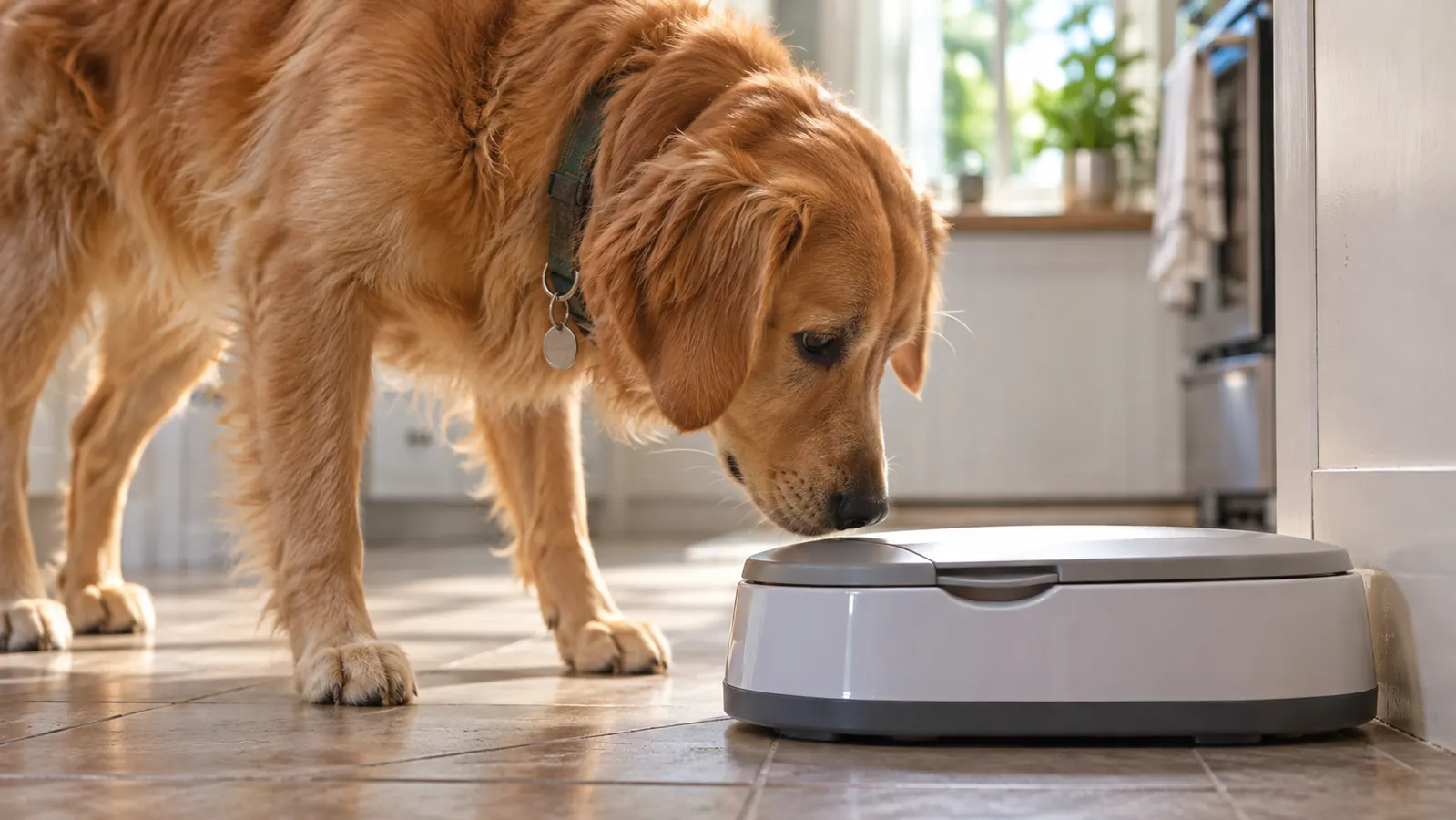
What living with it actually looks like: the SureFlap feeder measures 12.86 by 7.75 by 10.24 inches and weighs a bit over three pounds, so it takes up less floor than a boot tray. It comes with a placemat, which I did not expect to care about and now do, because Biscuit's kibble crumbs used to migrate across the kitchen. The bowl lifts straight out and goes in the sink, and the whole outside wipes down with a damp cloth in under a minute. Nothing about it is fussy.
Two things annoyed me. The lid is light plastic and it does click going up and down, so if your cat is a nervous one you should expect a week of suspicion. Pepper got his head caught in it once in the first month because he backed out too slowly; he was not hurt, but he was deeply insulted and he sulked under the bed for an hour. The other thing is capacity. Thirteen and a half ounces sounds like plenty until you have a grazer, and then you are topping it off every other day and washing the bowl daily if you feed wet. That is the trade for a bowl that stays covered.
I keep longer notes on how this feeder has held up over months, and I have also set it beside a plain elevated bowl, because for a while I thought height was the cheaper answer. That is the whole difference in one sentence: an elevated bowl helps an old cat with a sore neck and does absolutely nothing about a dog. I bought both. Only one of them changed anything in this house.
What I'd Tell You If We Were Sitting at My Kitchen Table
I would tell you to check the chip before you buy. The SureFeed works with 9, 10, and 15 digit microchip numbers, and if you are not sure which one your cat has, your vet can scan him in about ten seconds, usually for nothing. I would tell you that a collar tag is included, so an unchipped cat is not a dealbreaker, but a tag can come off and a chip cannot. I would tell you this is not a fix for a cat who is genuinely not eating. If Pepper had been sick, or in pain, or grieving, this feeder would have been a plastic box that opened on schedule while he got thinner. A cat who stops eating needs a veterinarian, not equipment. And I would tell you to give it a full week before you decide you wasted your money. Pepper did not trust the SureFlap on day one. I would not have either. By day five he was waiting for it, and Biscuit was standing over a closed lid wondering where her second dinner went.
One Bowl, One Cat, One Less Argument Every Evening
Microchip access, a lid that stays shut for the dog, and a cat who finally gets to finish his own meal. Check the current price and the chip compatibility list before you order.
Amazon See the SureFlap SureFeed on Amazon →